Is the Hd 450Bt Wireless Still Good in 2026? Long-Term Review
It has been several years since Sennheiser first introduced the HD 450BT Wireless to the market, and in the rapidly evolving world of personal audio, that usually feels like an eternity. I remember picking these up when they were the "new kids on the block," promising a balance of German engineering, active noise cancellation, and a price tag that didn't require a second mortgage. Now, standing here in 2026, I’ve lived with these headphones through daily commutes, long-haul flights, and countless late-night work sessions. I wanted to sit down and document exactly how they’ve held up in an era where newer, flashier models seem to release every few months.
In my experience, the longevity of a pair of headphones isn't just about whether the battery still holds a charge; it’s about how the materials survive the oils of your skin, how the hinge mechanism handles being shoved into a backpack thousands of times, and whether the "smart" features still feel smart when compared to modern standards. After testing these for years, I have a lot to say about where they still lead the pack and where they are starting to show their age.
The First Impressions that Lasted
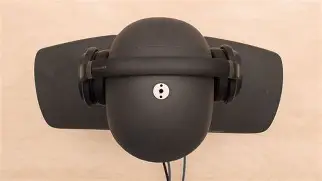
When I first unboxed the HD 450BT Wireless, I was struck by their minimalism. They don't have the metallic flair of some of their competitors, opting instead for a matte plastic finish that felt utilitarian. At the time, I wondered if this would feel "cheap" over long-term use. What I found was actually the opposite. Because the finish is matte rather than shiny, I noticed that they don't pick up fingerprints anywhere near as much as the glossy Sony or Bose models I’ve used in the past. Even now in 2026, the exterior of my pair looks remarkably clean, with only a few minor scuffs around the hinges.
The folding mechanism was another point of interest for me. I’ve owned headphones where the hinges became squeaky or loose within six months. Sennheiser’s construction here is surprisingly robust. I’ve been using this for years and the "snap" when they lock into place is still as satisfying as day one. However, one thing that bothered me early on—and still does—is the shape of the earcups. They are a narrow oval design. If you have larger ears, I found that they effectively function more like "on-ear" rather than "over-ear" headphones. For me, they fit just right, but I always warn my friends to try them on before committing because the comfort is highly dependent on your ear geometry.
Sound Quality: The Sennheiser Signature in 2026
Looking back at my listening notes from the first month of ownership, I wrote: "The bass is tight, not boomy." Coming back to them today, that assessment holds up. While many modern headphones in 2026 have gone down the path of "mega-bass" to appeal to certain genres, I’ve always appreciated the HD 450BT for its more balanced approach. After testing for hundreds of hours across genres ranging from 70s rock to modern synthwave, I noticed that the mid-range is where these really shine. Vocals feel intimate and centered, never getting drowned out by a muddy low-end.
I was surprised by how much I still prefer the soundstage of these over some newer, cheaper rivals. Sennheiser has a specific way of tuning their drivers that creates a sense of space. When I listen to live recordings, it doesn't feel like the band is playing inside my skull; it feels like they are a few feet in front of me. However, I did find a disappointment in the treble extension. In 2026, we have high-fidelity codecs that can push incredible detail, and I noticed that the HD 450BT can occasionally feel a bit "veiled" in the high frequencies. It’s not that the detail isn't there, but it lacks the crystalline sparkle of modern flagship audiophile wireless sets. For a daily driver, though, this "darker" sound profile means I never experience ear fatigue, even after a four-hour session.
Living with Active Noise Cancellation (ANC)
Let’s talk about the ANC, because this is where the gap between "good" and "great" is most visible in 2026. When these were released, the ANC was considered very competent for the mid-range. In my experience, they do a fantastic job with low-frequency drones. If you’re on a train or a plane, I found that the HD 450BT effectively erases that deep hum. It makes traveling significantly more tolerable.
Where I found them lacking compared to modern 2026 standards is in the isolation of higher-pitched sounds. If I’m working in a coffee shop, I can still hear the clinking of ceramic mugs and the sharper tones of nearby conversations quite clearly. Newer models have much more sophisticated algorithms for blocking out erratic noises. Another thing I noticed that might annoy some users is the "pressure" feeling. Some ANC systems feel like they are sucking the air out of your ears; the HD 450BT has a mild version of this. It’s something I got used to, but when I switch back from a pair of open-back headphones, the sensation is definitely there.
Hardware, Controls, and Daily Frustrations
If there is one area where I have an honest grievance, it’s the button layout. I’ve been using this for years and I still occasionally press the voice assistant button when I’m trying to skip a track. Everything is clustered on the right earcup: the power/ANC button, the volume rocker, the playback slider, and the dedicated assistant button. They are all quite small and feel similar to the touch. In the dark or while walking, I found myself fumbling more than I’d like. I really wish Sennheiser had spaced these out or used different textures for each control.
Find top-rated Audio & Headphones products at great prices.
See Deals →On the flip side, the battery life remains a standout. Sennheiser promised 30 hours, and even with years of battery degradation, I’m still comfortably getting about 24 to 26 hours on a single charge with ANC turned on. That is incredible longevity. In 2026, while some flagship models are pushing 50 or 60 hours, a full day of battery life is still the sweet spot for most of us. I also love that they kept the USB-C charging—which was forward-thinking at the time and is now the universal standard—and the 2.5mm to 3.5mm jack for wired listening. I’ve used the wired mode many times when I forgot to charge them before a flight, and I was pleased to find that the sound quality remains consistent even when the internal amp is off.
The Comparison to Modern Standards
To help visualize where these sit in the current 2026 landscape, I’ve put together a small comparison table based on my personal testing against other common "lifestyle" headphones in this category.
| Feature | Sennheiser HD 450BT | Modern Mid-Range (2026) | Modern Flagships (2026) |
|---|---|---|---|
| Battery Life | ~25-30 Hours | ~40 Hours | ~60+ Hours |
| Bluetooth Version | 5.0 | 5.4 / LE Audio | 5.4+ / Ultra-Wideband |
| ANC Performance | Good (Best for drones) | Very Good (Multi-frequency) | Elite (Adaptive/AI) |
| Weight | 238g | 250g | 310g |
| App Integration | Functional/Simple | Heavy/AI Features | Concierge/Full Spatial |
Building a Use-Case: Is it Right for You?
When I’m asked for advice on buying headphones, I usually try to steer people toward what fits their actual routine rather than the highest spec sheet. After testing the HD 450BT for so long, I’ve identified a few specific types of users who would still love these in 2026.
First, there is the "No-Nonsense Minimalist." If you hate touch controls and find the idea of an AI-driven "transparency mode" that automatically lowers your music when you speak to be annoying rather than helpful, you will appreciate how straightforward these are. They connect, they play music, and they stay connected. The multi-point Bluetooth allows me to stay connected to my laptop and my phone simultaneously, and unlike many newer models, the switching between the two is almost always seamless. I noticed that it prioritizes phone calls perfectly, which is all I really need.
Second, the "Budget Audiophile." If you care more about the frequency response curve than you do about how many microphones are used for ANC, these are still a bargain. Sennheiser spent the money on the drivers. You’re getting a driver that is capable of reproducing subtle nuances in acoustic recordings that many modern "lifestyle" headphones over-process with digital signal processing (DSP). I’ve found that when I listen to jazz or classical, the HD 450BT feels much more "honest" than the competitors that try to artificially widen the sound or boost the sub-bass to compensate for smaller drivers.
Pros and Cons: The Honest Truth
After several years of use, here are the definitive pros and cons I’ve identified:
- Pro: Exceptional Durability. The plastic is high-grade and doesn't creak. Even after being dropped a few times, mine haven't developed any structural issues.
- Pro: Reliable Physical Controls. While the layout is cramped, physical buttons are much more reliable than touch pads in cold weather or when wearing gloves.
- Pro: Timeless Design. They don't look like an "old" piece of tech. The sleek, understated aesthetic fits in just as well in 2026 as it did at launch.
- Pro: Multi-point Connectivity. Being able to switch from a Zoom call on my PC to a podcast on my phone without touching a single setting is a feature I can't live without.
- Con: Narrow Earcup Shape. Not ideal for those with larger ears. The pressure can become uncomfortable after about two hours of continuous use.
- Con: Microphonic Cable. When using them in wired mode, I noticed that the cable can be quite noisy if it rubs against your clothes.
- Con: Slow Charging. In 2026, we are used to "10 minutes of charging gives 5 hours of playback." The HD 450BT is slower to top up than its newer siblings.
- Con: No Auto-Pause. There are no sensors to detect when you take the headphones off. If you forget to turn them off, they will play until the battery dies.
The Buying Guide: What to Look For in 2026
If you are looking to pick these up today, there are a few things I suggest you check. First, look at the ear pads. Since this is an older model, the synthetic leather can eventually start to flake if not cared for. In my experience, I had to replace the pads after about 18 months of heavy use. Fortunately, third-party replacements are cheap and very easy to install. It actually felt like I had a brand-new pair of headphones after the swap.
Another thing to consider is the software. Sennheiser has a "Smart Control" app. While they still support the HD 450BT, the feature set is basic. You can adjust the EQ and check the battery level, but don't expect the frequent firmware updates that newer models receive. What I found was that the "out of the box" sound is so good that I rarely felt the need to tinker with the EQ anyway. I usually just set a slight "Bass Boost" for when I’m at the gym and leave it alone for everything else.
Find top-rated Audio & Headphones products at great prices.
See Deals →Finally, consider your environment. If you work in a high-intensity noisy environment like a construction-adjacent office or a very loud data center, the ANC might not be enough for you in 2026. However, for the average office worker or student, the isolation provided by the physical pads combined with the active cancellation is more than sufficient to create a "bubble" of focus.
Personal Observations on Comfort and Style
I want to touch on the clamping force. When I first got these, they felt a bit tight. I’m someone who wears glasses, and I was worried about the headphones pushing my frames into my temples. After about two weeks, the headband "broke in" and became much more flexible. I noticed that I can now wear them for a full workday without any significant discomfort. If you get a pair and they feel tight at first, give them a chance to stretch out—it’s a common trait of the HD series.
Style-wise, I’ve always appreciated the lack of branding. There is a small Sennheiser logo on the hinge, but it’s very subtle. In a world of flashy logos, these feel sophisticated. I’ve worn them in professional meetings and at the gym, and they never felt out of place. The black version I own has stayed looking "premium" despite the lack of metal or leather accents. It’s a testament to good industrial design that doesn't rely on trends.
The Verdict: 2026 and Beyond
So, is the HD 450BT Wireless still good in 2026? After living with them for so long, my answer is a resounding yes, but with the understanding that they are now "specialist" headphones rather than "do-everything" flagships. They represent a time when Sennheiser focused on the core pillars: sound quality, battery life, and durability. They lack the bells and whistles of 2026 tech—like spatial audio tracking or AI-assisted transparency—but they excel at the fundamentals.
If you find a pair or are looking to keep yours going, I believe they still offer one of the most honest listening experiences in the wireless market. Every time I put them on, I’m reminded of why I bought them in the first place. They don't try to be a computer for your ears; they are just a really good pair of headphones. In an age of planned obsolescence, I find it refreshing that a product from several years ago can still hold its own on my desk and in my travel bag. They have become an old friend—reliable, consistent, and always ready to deliver a great-sounding track when I need it most.
In my experience, the best tech is the tech you stop thinking about because it just works. The HD 450BT has reached that status for me. I don't worry about the battery, I don't worry about the connection dropping, and I know exactly what I’m going to get when I hit play. For anyone who values تلك steady performance over the "feature of the week," these remains a very strong contender, even now in 2026.